ADAS Calibration Sarasota: In-House, Certified, and Done the Same Day
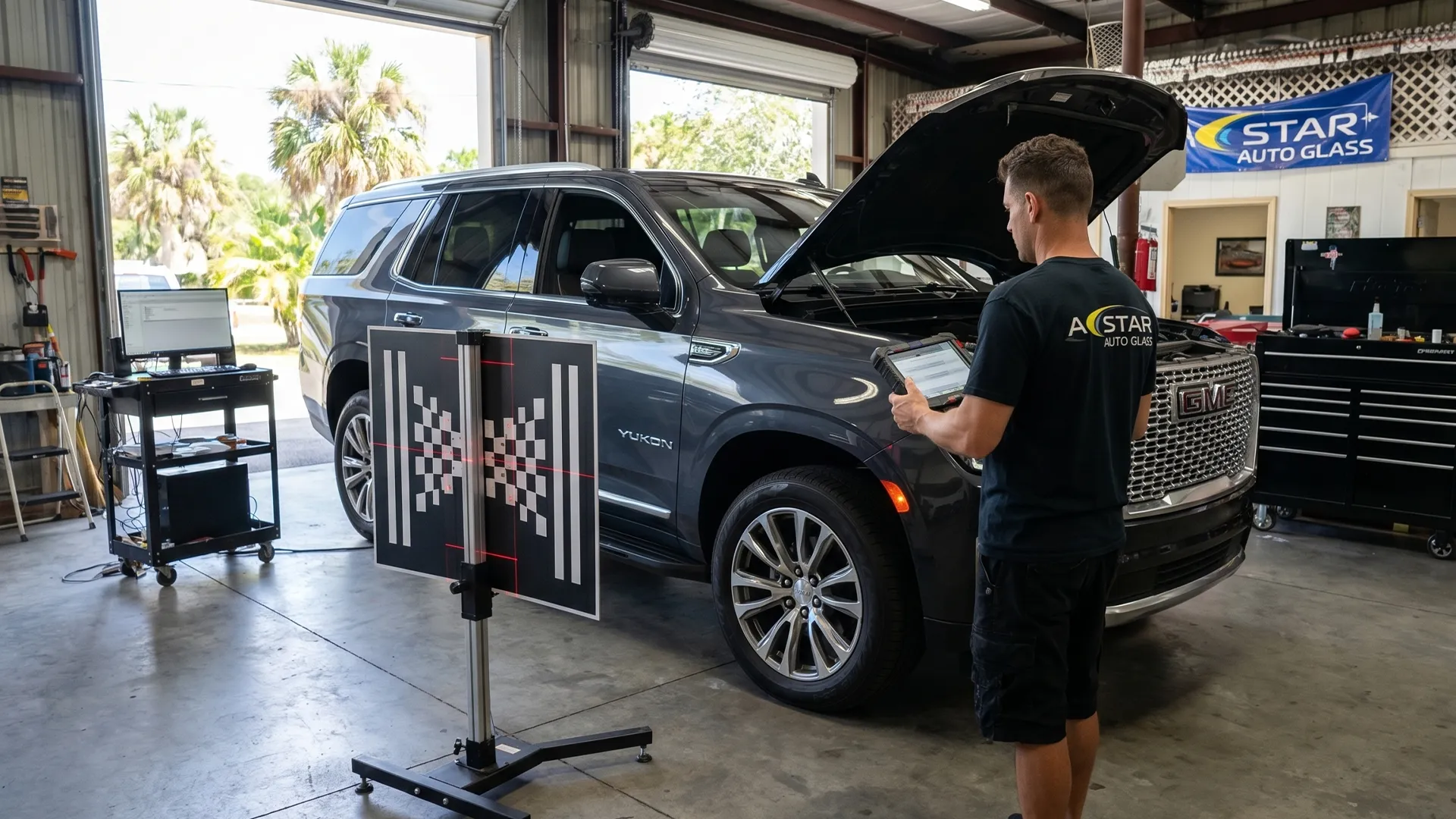
When your windshield is replaced, the camera that powers your car's safety systems goes out of calibration. A Star Auto Glass performs both static and dynamic ADAS calibration Sarasota drivers need, immediately after installation, before you drive away. Alex is certified, the equipment is professional-grade, and the shop environment is built for exactly this work.
What ADAS Is, and Why a Windshield Replacement Affects It
The Camera at the Top of Your Windshield Does More Than You Think
ADAS stands for Advanced Driver Assistance Systems. It's the cluster of safety features that quietly run in the background of every late-model vehicle: lane departure warning, lane keeping assist, automatic emergency braking, forward collision alert, adaptive cruise control, traffic sign recognition, and in some vehicles, pedestrian and cyclist detection. Most of those features depend on a single forward-facing camera mounted at the top of the windshield, behind the rearview mirror. That camera is the eye of the system.
When the windshield comes out, the camera's reference frame goes with it. The new glass goes in. The camera mount might be a fraction of a degree off from where it was before. The camera itself might sit a millimeter higher or lower in its housing. Those small variations matter because the camera was originally calibrated against a fixed reference at the factory. Without recalibration, the system is making decisions based on bad geometry.
Why It Matters: The Safety Margin Disappears
The National Highway Traffic Safety Administration has documented that ADAS technologies meaningfully reduce crash rates when they're functioning at factory specification. Forward collision warning, automatic emergency braking, and lane departure warning all contribute. When those systems aren't calibrated, the safety margin they provide doesn't just degrade gracefully. It can disappear, or worse, it can be wrong in ways the driver can't see. A lane departure system that thinks the lane is six inches to the left of where it actually is pulls the steering wheel the wrong direction. Automatic emergency braking calibrated against the wrong distance hesitates a half-second too long. The driver doesn't know any of this until something happens.
You can read NHTSA's ongoing research on ADAS safety performance at nhtsa.gov.
Which Vehicles Are Affected
As a practical rule, if your vehicle was built after 2015 and includes lane departure warning, forward collision alert, automatic emergency braking, or adaptive cruise control, it has a forward-facing camera and it almost certainly needs recalibration after a windshield replacement. Manufacturers vary in how strictly they require it, but the engineering reality is consistent: replace the windshield, recalibrate the camera. The Insurance Institute for Highway Safety maintains documentation on which ADAS features come standard on which makes and models, and the list grows every year.
Static vs. Dynamic Calibration: Two Different Procedures, Often Both Required
Static ADAS Calibration Sarasota Shops Rarely Have the Bay For
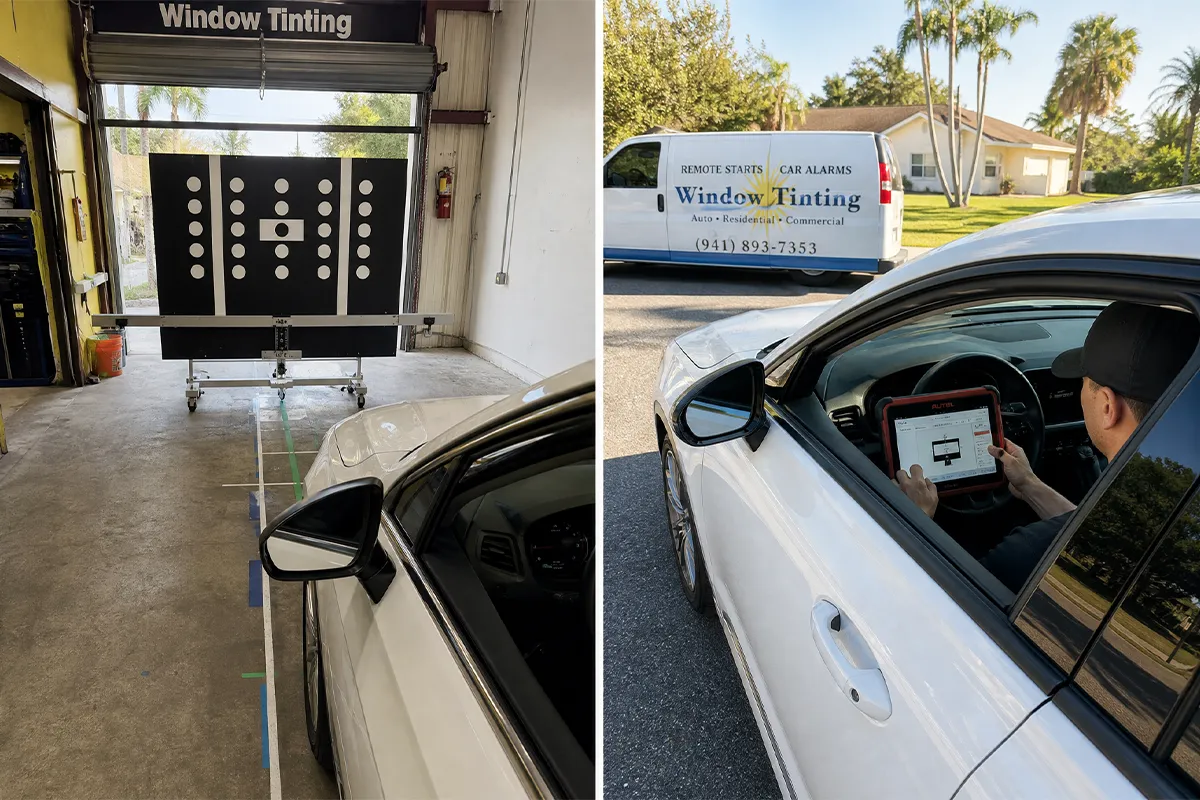
Static calibration is performed with the vehicle parked, engine running, and a calibration target board positioned at a precise distance and angle in front of the windshield. The Autel system reads the camera's view of the target and walks through a sequence that resets the camera's reference frame to factory specification. It is geometry, not magic. The vehicle has to sit on a level floor. The lighting has to be consistent. The target has to be positioned within fractions of an inch of the manufacturer's spec. The background behind the target can't have visual noise that confuses the camera.
This is why static calibration cannot be done in a driveway or a parking lot. Driveways slope. Parking lots have variable light, painted lines, and uncontrolled backgrounds. None of those environments meet the manufacturer's requirements. A Star's Sarasota shop has a dedicated bay built for this work: level floor, controlled lighting, and clear sightlines for the target. It is the reason 80 to 85 percent of our work is done in-shop rather than mobile.
Dynamic Calibration: The Road Procedure
Dynamic calibration is performed by driving the vehicle along clearly marked roads at specified speeds while the Autel system reads the camera's view in real time. The camera relearns its position by observing lane lines, traffic signs, and other vehicles in their actual environment. Sarasota has the road conditions this procedure requires: clean lane markings on major arterials, predictable traffic flow on the early-morning routes we use, and the right speed envelope on roads like Clark Road and Bee Ridge. Most dynamic procedures take 15 to 30 minutes of road time.
When Both Are Required
Many late-model vehicles require both procedures, in sequence. Static first, to set the camera's baseline. Dynamic second, to verify the system performs correctly under real-world conditions. Toyota, Honda, Subaru, and several European manufacturers commonly specify both. We check the OEM service procedure for your specific vehicle before scheduling and tell you up front which procedures are required, how long the total job will take, and what your insurance is covering.
Vehicles We Calibrate, and the Systems We Reset
Most Late-Model Sedans, SUVs, and Trucks
The list of vehicles requiring ADAS calibration after windshield replacement is long and keeps growing. Honda Civics and CR-Vs with Honda Sensing. Toyota Camrys, RAV4s, Highlanders, and Tundras with Toyota Safety Sense. Subaru Outbacks, Foresters, and Ascents with EyeSight. Hyundai and Kia models with SmartSense. Nissan Rogues, Altimas, and Pathfinders with ProPILOT Assist. Ford F-150s, Explorers, and Edges with Co-Pilot360. Chevy Silverados, Equinoxes, and Tahoes with the Chevy Safety Assist suite. Ram 1500s with the equivalent Stellantis package. Mazda CX-5s and CX-9s with i-Activsense. All of these vehicles use a windshield-mounted camera that needs recalibration when the glass changes.
European and Luxury Brands
BMW, Mercedes-Benz, Audi, Volvo, Jaguar, Land Rover, and Porsche all use windshield-mounted ADAS cameras across their current model lines, often combined with radar units behind the front grille. The calibration procedures for these brands tend to be more involved and more time-sensitive than their domestic counterparts. We've calibrated vehicles across all of these brands. The Autel system supports the full OEM procedure for each.
Tesla and Other Camera-Heavy Vehicles
Tesla vehicles rely heavily on camera-based Autopilot, which uses a different calibration approach than most traditional ADAS systems. We follow Tesla's documented service procedure for windshield replacement and camera reset. Other camera-heavy platforms, including newer Mach-E Mustangs and Hyundai Ioniq 5s and 6s, follow manufacturer-specific procedures we run to the OEM spec.
Which Systems Get Reset
After calibration, the systems we verify operational include lane departure warning, lane keeping assist, automatic emergency braking, forward collision alert, adaptive cruise control, traffic sign recognition, and where equipped, pedestrian and cyclist detection. We don't hand the keys back until every affected system reads green on the Autel post-scan.
How A Star Handles ADAS Calibration Sarasota Drivers Can Trust, Step by Step
-
1
Pre-Scan Before Anyone Touches the Glass
Before the windshield is removed, Alex runs a full diagnostic scan of your vehicle's electronic control modules using Autel diagnostic tools. The scan documents every existing fault code, with particular attention to ADAS-related codes that may have been present before we arrived. The customer gets the readout. It's the same step a dealership service department runs at the start of a calibration visit, and most independent auto glass shops skip it entirely. Skipping the pre-scan is how disputes happen, because there's no record of what the vehicle's electronics looked like before the job started. We don't operate that way.
-
2
Windshield Removal and Replacement
The old windshield comes out. The pinch weld is cleaned and prepped. Sika urethane primer is applied per manufacturer spec. The new OEM or OEE-quality glass goes in with Sika adhesive that meets FMVSS 212, the Federal Motor Vehicle Safety Standard for windshield retention in crashes. Cure time is observed, not rushed. This isn't the ADAS step yet, but the quality of the glass installation directly affects whether the camera will recalibrate cleanly. A windshield that sits a millimeter off in its frame can require multiple calibration attempts, or fail calibration entirely.
-
3
Static Calibration Setup
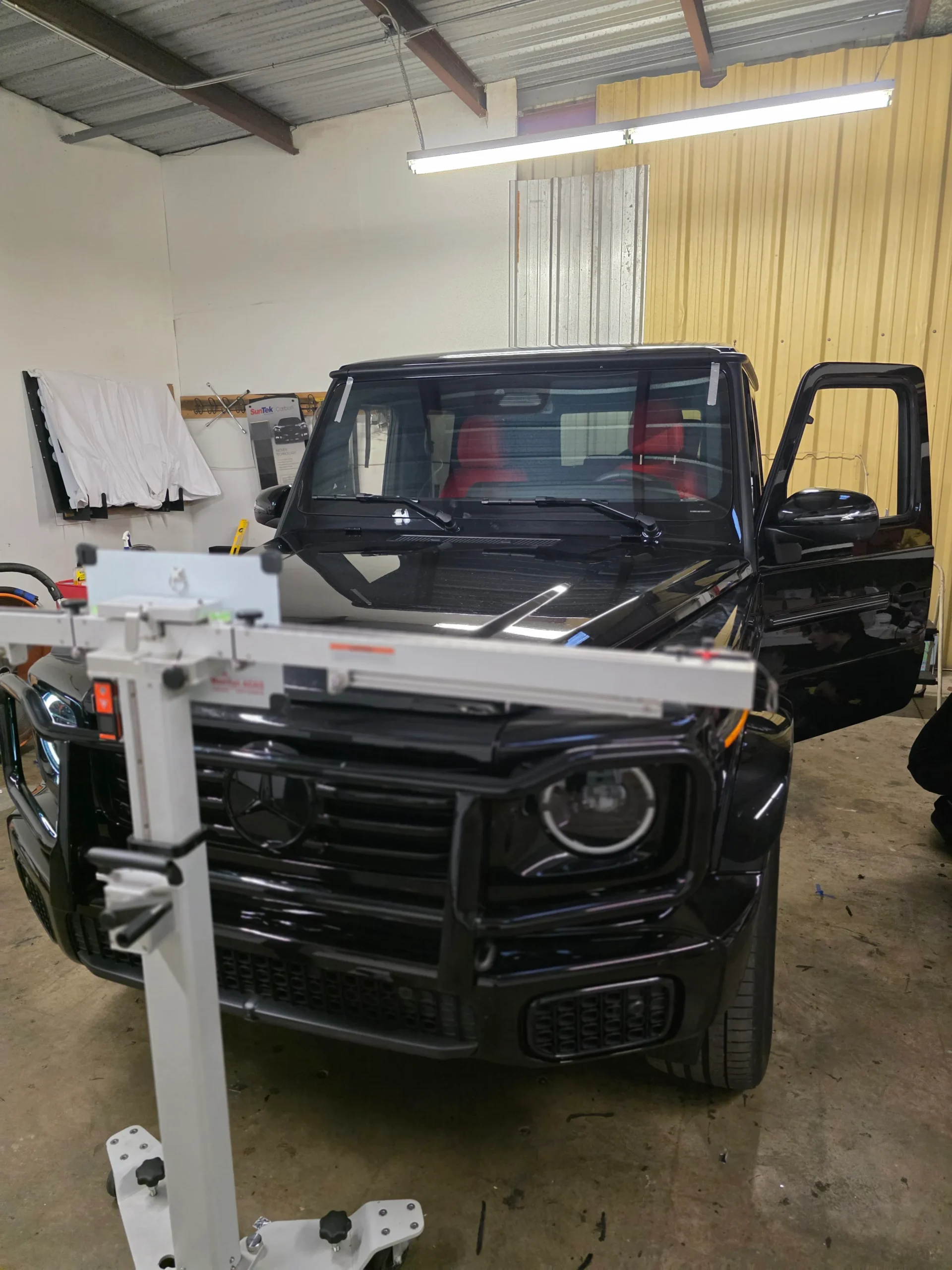
The vehicle is positioned on the level shop floor. The calibration target board is set up at the manufacturer-specified distance, angle, and height in front of the windshield. Shop lighting is adjusted for consistency. The Autel system is connected to the vehicle's OBD port and the camera bus. The static calibration sequence runs through the OEM procedure for your specific vehicle, target images and all. Successful completion produces a clean pass on the Autel readout.
-
4
Dynamic Calibration on the Road
If your vehicle requires dynamic calibration, a technician takes the car out on a planned route at the specified speeds. The Autel system records the camera's behavior during the drive, confirming that the system is reading lane markings, signs, and surrounding vehicles correctly. We don't end the procedure until the dynamic phase completes cleanly. If something looks off, we return to the shop and rerun the static step.
-
5
Post-Scan and Verification
Once both calibration phases are complete, the Autel post-scan runs one more diagnostic readout. Every ADAS module is verified green. If a fault code remains, we resolve it before the car leaves. The customer receives the pre-scan and post-scan documentation, which can be useful for insurance records, service history, or any future warranty conversation.
Why the Glass Job Matters as Much as the Calibration Itself
FMVSS 212: The Standard That Holds Your Windshield in a Crash
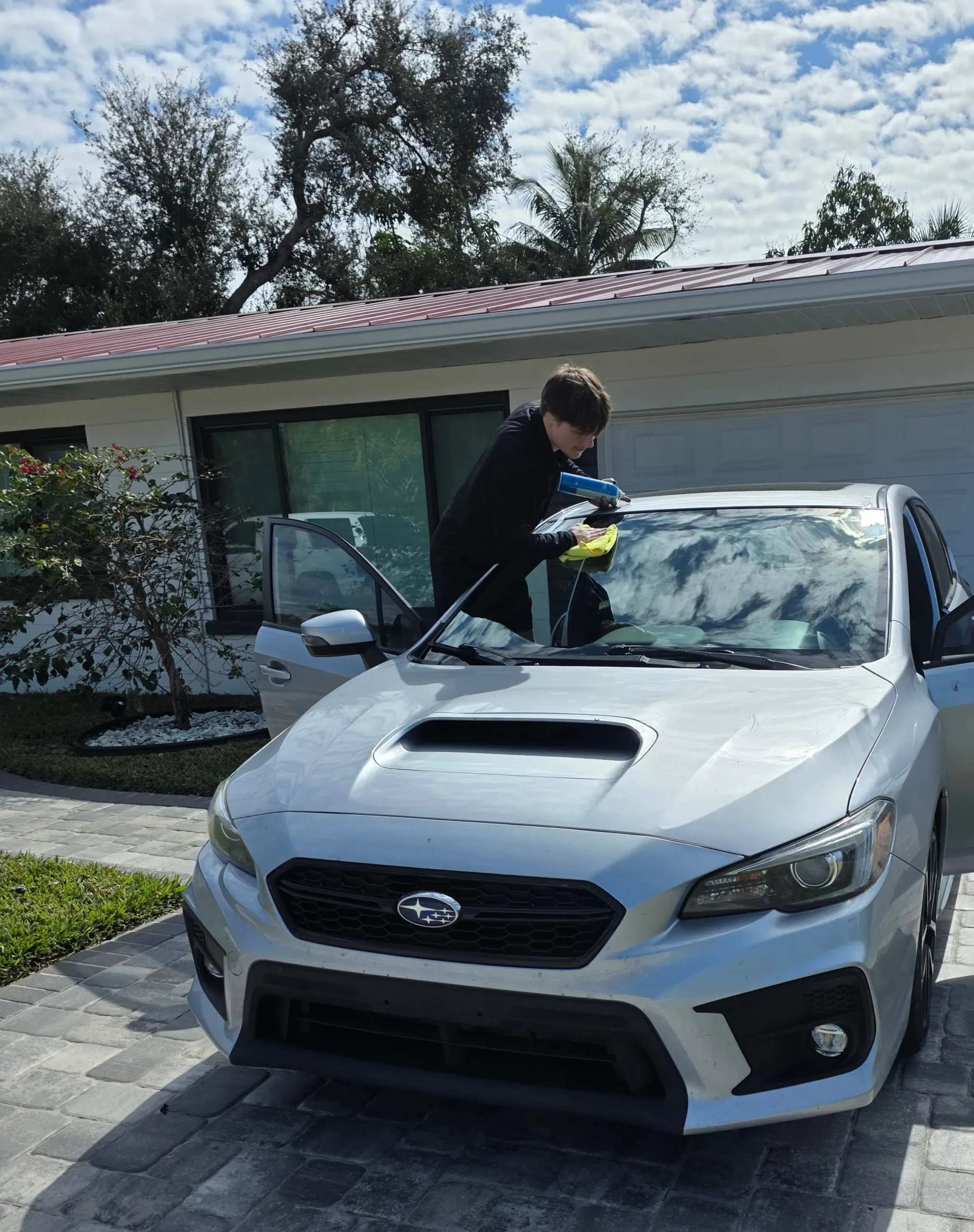
FMVSS 212 is the Federal Motor Vehicle Safety Standard that defines how a windshield must remain bonded to the vehicle frame during a frontal crash. A windshield that comes loose in a crash compromises the passenger compartment, undermines the airbag deployment timeline (passenger-side airbags often deploy against the windshield), and can fail to support the roof in a rollover. FMVSS 212 sets the minimum performance the bond has to deliver. A Star uses Sika-brand urethane adhesive products that meet or exceed this standard, with proper primer and the cure times the adhesive manufacturer specifies.
How a Bad Glass Install Breaks Calibration
Here's the connection most drivers don't make: if the windshield is installed even slightly off-position, the camera mounted to it ends up off-position too. The calibration process tries to compensate for small variances, but it has limits. A windshield that sits low in the frame, sits high, or is tilted off-axis can cause calibration to fail outright, or to pass on the Autel readout while still operating outside the camera's optimal accuracy. The fix is to install the glass correctly the first time. Proper urethane, proper primer, proper cure, glass seated against the manufacturer's reference points. When the install is right, calibration is straightforward. When the install is sloppy, calibration becomes guesswork.
Why We Won't Use Cheap Aftermarket Glass
Cheaper aftermarket glass exists. Some of it is honest OEE quality. A lot of it isn't. Glass with slight curvature variations from OEM spec can distort the camera's view enough to throw off calibration. Glass with imperfect optical clarity can confuse the camera's lane-line detection. Glass that doesn't fit the frame precisely can sit a hair off, with the same calibration consequences. A Star uses OEM or OEE-quality glass, sourced from suppliers whose specs we've verified. Saving 40 dollars on aftermarket glass isn't worth the safety-system fallout that comes after.
Why Most Auto Glass Shops Don't Do This Correctly
The Equipment Investment Is Significant
Professional ADAS calibration equipment is expensive. The system, the target boards for various manufacturers, the diagnostic tooling, the certifications, and the vendor support contract all add up. For a small auto glass shop running mobile-only or operating from a single-bay storefront, it's a hard investment to justify. The math only works if you're committed to doing this work at volume and doing it correctly. Many shops choose not to.
The Shop Environment Requirement Rules Out Mobile-Only Operators
Mobile auto glass providers don't have a shop. They have a van. There is no level floor, no controlled lighting, no clear background, and no place to set up a static calibration target. A mobile-only operator who claims to do ADAS calibration on-location is either skipping the static step entirely, sub-contracting it out to a calibration shop after the fact, or doing it badly. Customers who don't know to ask end up with uncalibrated vehicles. The dashboard warning light is the most obvious symptom, but plenty of vehicles fail calibration silently, with the driver only finding out later.
The Sub-Out Model Has Its Own Problems
Some auto glass shops do windshield replacement themselves and sub out the calibration to a third-party shop nearby. The customer drives the freshly-replaced vehicle to a second appointment, sometimes days later, with the camera operating out of spec the entire time in between. If the calibration shop is competent, the work eventually gets done. If they're not, or if the customer never makes the second appointment, the safety systems run uncalibrated indefinitely. A Star does both steps under one roof in one visit. There's no second appointment because everything happens in the same bay.
We Fix the Aftermath of Sloppy Calibration Work
A meaningful portion of A Star's calibration work comes from customers whose windshield was replaced elsewhere and whose ADAS warning lights came on shortly afterward, or whose lane departure system has been behaving strangely. We run a diagnostic, identify what's actually wrong, and recalibrate. Sometimes it's a straight calibration. Sometimes the original glass install was bad enough that the windshield needs to come back out and be reinstalled correctly before calibration can pass. We tell customers honestly what the situation is and what it'll take to fix. Most cases can be addressed in one visit.
Frequently Asked Questions About ADAS Calibration
What is ADAS calibration?
ADAS calibration is the process of resetting the forward-facing camera and supporting sensors that power your vehicle's lane departure warning, automatic emergency braking, adaptive cruise control, and related safety features. Anytime the windshield is removed and replaced, the camera mounted to it goes out of factory specification. Calibration brings it back.
How long does ADAS calibration take?
Static calibration typically takes 30 to 60 minutes after the windshield is installed. Dynamic calibration adds another 15 to 30 minutes of road time. Vehicles requiring both static and dynamic procedures can take up to two hours total. Complex multi-camera vehicles occasionally take longer. We tell you up front.
Can I drive my car between windshield replacement and calibration?
Technically yes, but we don't recommend it and we don't operate that way. The safety systems are running on bad data until calibration is complete. At A Star, the calibration happens immediately after installation, in the same bay, before you take the keys back. There's no gap.
What's the difference between OEM glass and aftermarket glass for ADAS-equipped vehicles?
OEM glass is manufactured by or directly for your vehicle's factory and matches the original optical specifications exactly. OEE, Original Equipment Equivalent, meets the same specs without carrying the factory brand. Both work well with ADAS cameras. Cheap aftermarket glass can have small curvature variations, optical inconsistencies, or imperfect frame fitment that interferes with calibration. A Star uses OEM or OEE-quality glass on every job.
Will my insurance cover ADAS calibration?
In most cases, yes. If your windshield replacement is covered under Florida's comprehensive insurance statute, the required ADAS calibration is typically covered as part of the same claim because it's a necessary step for safe operation of the vehicle. We handle the documentation and the claim with your carrier directly.
What happens if calibration fails on the first attempt?
We diagnose why. Sometimes it's a fault code that needs to be cleared. Sometimes the glass needs to be reseated. Sometimes the vehicle needs to sit for a longer warm-up period than the standard procedure calls for. We run through the OEM service procedure until calibration passes cleanly. The customer is not charged for additional attempts. Getting it right is what we agreed to.
Do you provide documentation that calibration was completed?
Yes. Every customer receives the Autel pre-scan and post-scan readouts. The post-scan is the verification that every ADAS module is reading correctly after the work. Keep it with your vehicle service records. It's also useful documentation if there's ever a question with your insurance carrier or with a dealership service department.
Can A Star handle calibration for body shops, dealerships, or fleet vehicles?
Yes. We work directly with collision repair shops that don't have in-house ADAS calibration capability, with dealership service departments who need additional calibration capacity, and with fleet operators who need consistent quality across multiple vehicles. Call Alex at (941) 893-7353 to set up a recurring arrangement.
Need ADAS Calibration Sarasota Drivers Actually Rely On?
Whether you're scheduling a windshield replacement that needs calibration, dealing with an ADAS warning light from a previous shop's work, or running a body shop that needs a reliable calibration partner, Alex and his team are ready. Same-day service when the schedule allows. Always done to manufacturer specification.
Schedule Service or Get a Free Quote
Phone is required. We respond the same day in almost all cases.
Prefer to talk? Call (941) 893-7353.